Building Your Business with Neurodivergent Strengths and Practical Strategies
For neurodivergent entrepreneurs building a first business, freelancers, creators, and service providers, getting from a strong idea to steady operations can feel harder than it “should.”
Business startup challenges often collide with sensory processing differences (noise, lighting, social intensity) and the heavy executive function in business demands of planning, prioritizing, and following through.
At the same time, unique entrepreneurial strengths like pattern recognition, deep focus, systems thinking, and high empathy can create products and services with a clear edge. With the right business ownership perspectives, those strengths can become a real, sustainable business model.

Image source: Pexels
Use 6 Practical Systems to Launch and Operate Smoothly
Build your business around the way your brain and body actually work. These systems reduce decision fatigue and sensory overload while protecting the strengths you identified, pattern-spotting, deep focus, originality, and empathy.
Design a sensory-friendly work environment: Set up one “default” workspace you can return to without rethinking it every day. Start with light and sound controls (lamp instead of overhead light, noise dampening, a consistent playlist) and create a small “reset kit” (water, snack, stim tool, eye mask). Add a 10-minute shutdown ritual, clear the desk, write tomorrow’s first task, and close all tabs, so your brain doesn’t keep running after hours.
Run your week on a simple operating rhythm: Pick two recurring planning blocks: 20 minutes on Monday to choose 1–3 priorities, and 15 minutes on Friday to review what moved, what stalled, and why. Keep daily structure lightweight: one “must-do” task, one “money” task (sales, outreach, invoicing), and one “maintenance” task (admin, cleanup). This protects executive function by lowering the number of daily decisions while still building consistency.
Use an externalized organization that doesn’t rely on memory: Put tasks in one trusted system and make it visible, kanban board, checklist, or calendar, so your brain isn’t the storage unit. Break anything you avoid into steps small enough to start in 3 minutes (e.g., “open invoice template” rather than “do invoicing”). Create templates for repeat work: client onboarding email, proposal outline, content caption formulas, and a standard folder structure for each project.
Build one low-overwhelm digital marketing loop: Choose one channel you can sustain (email, short-form video, blog, or community posts) and commit to a 30-day experiment with a clear cadence. A practical starting loop is “one helpful tip → one proof point/story → one call to action,” repeated weekly, then recycled into smaller posts. Many small businesses lean on email because over 50% of consumers say they make a purchase from a marketing email at least once a month, making it a steady, predictable option.
Network in ways that respect your energy and communication style: Replace open-ended mingling with structured formats: 15-minute virtual coffee chats, Q&A-based meetups, or contributing one useful resource inside an online group. Bring a script: what you do, who you help, and one specific request (referrals, introductions, feedback on an offer). Afterward, log one sentence about the person and schedule a follow-up date immediately.
Remember that relationships grow with reminders, not willpower.
Create a “single source of truth” with productivity tools: Consolidate projects, communication, and files into one hub so you’re not context-switching across five places. Start with three dashboards: “Leads,” “Active Clients,” and “Admin,” and automate what you repeat (intake forms, meeting booking, invoice reminders). If you’ve avoided tools, you’re not alone, 84% of organizations worldwide now use at least one productivity software platform in daily operations, because clarity and shared visibility reduce dropped balls.





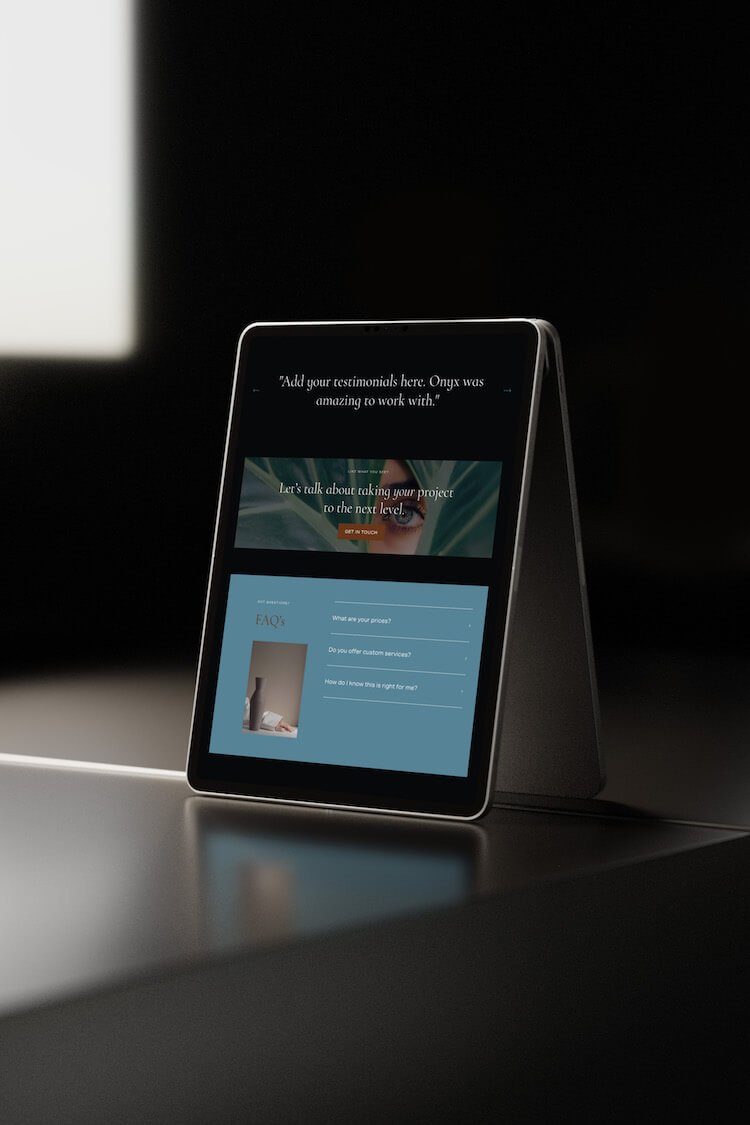


Pictured above are some examples from our expertly designed Squarespace website template collection to show you how you can position your expertise like social proof in testimonial sections or in-depth case studies in your portfolio page. Every template has a pre-designed pages which makes it simple and quick to add value-packed, relevant case studies to provide proof of how your business has impacted customers over time. This is the fastest way to build trust, especially in the online space. Keep in mind that that is essential to keep this page updated as your business grows, and feedback changes over time.
Image source: Premium product mockups by Moyo Studio (GET 15% OFF + 4 free mockups using our affiliate link).
Build Leadership Skills With a Structured Online Business Program
Once your day-to-day systems are in place, the next lever is strengthening the business judgment and leadership needed to scale. Sharpening your skills through formal education can help close common gaps in strategy, management, and decision-making, especially when you have a strong idea but need a clearer path to sustainable operations.
Going back to school for an MBA can deepen your understanding of business and leadership while building self-awareness through self-assessment, useful for leading people, managing yourself, and making more confident choices. If sensory overload or disorganization still knocks you off track, the next section tackles what to do in the moment.
Startup Q&A for Neurodivergent Founders
What can I do if sensory overload hits during client work?
Build a simple “pause protocol” you can use anywhere: mute notifications, switch to one task, and set a 10-minute timer. Keep a sensory kit nearby (noise reducers, water, snack, sunglasses) and use a templated message to buy time with clients. After you recover, write one line about what triggered it so you can adjust your environment next time.
How do I stay organized when my brain resists routines?
Use a minimum-viable system: one capture tool, one task list, and one weekly review. Make tasks tiny and visible, like “send invoice” instead of “admin,” and attach them to existing habits (coffee, lunch, shutdown). If you need support, a novice entrepreneur can feel less overwhelmed by seeking tailored advice and resources.
How do I know if my business idea has real demand?
Validate before you build by running 10 short customer conversations and a small pre-sale or pilot. Track what people will pay for, not just what they praise, and refine your offer from that data. Many startup failure reasons come from misreading market demand, so testing early protects your energy.
Can I market without burning out on social media?
Yes. Pick one channel you can tolerate, batch content once a week, and reuse the same core message in three formats (post, email, short video). If visibility spikes your anxiety, lean on an email list and partnerships where you can show up with a script.
How do I network if events feel awkward or overwhelming?
Go smaller and more structured: one-on-one coffees, online communities, or coworking “focus hours.” Prepare two questions and a 20-second intro, then exit with a clear follow-up like “Can I send you my one-page summary?”
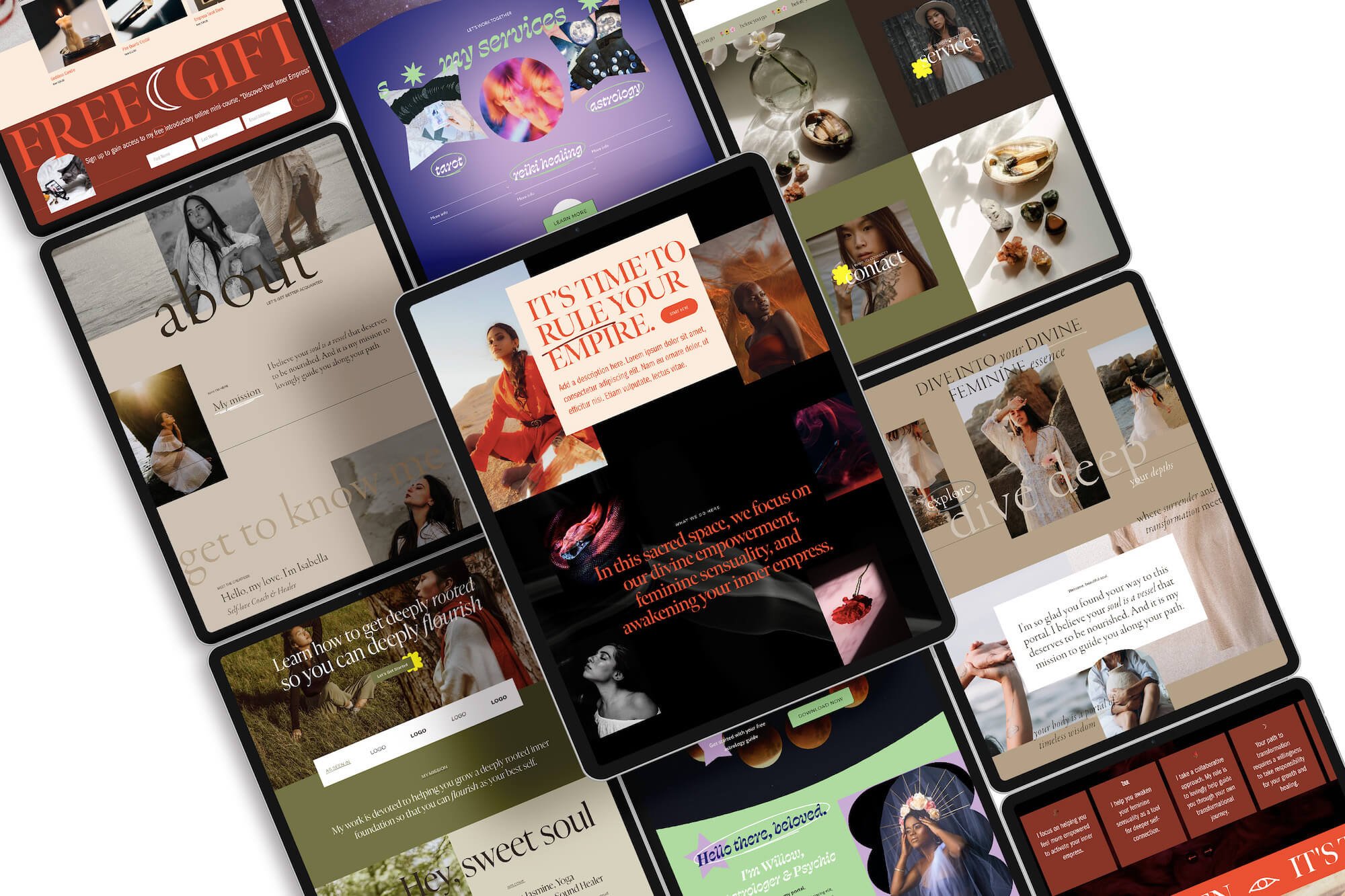
Image source: The Humanista Co.’s expertly-designed, astrology-inspired Squarespace website template collection for entrepreneurs

Image source: Pexels
Quick Start-and-Grow Checklist for Your Business
To keep it workable: This checklist turns good intentions into a repeatable plan you can use on busy, noisy, low-energy days. Pick the items that support you now, then add one more as your capacity grows.
Set up a pause protocol for overload moments
Prepare a small sensory kit for work sessions
Choose one capture tool for every idea and request
Create one short daily task list with tiny next steps
Schedule one weekly review to reset priorities
Validate your offer with 10 customer conversations
Run one small paid pilot before building bigger
Commit to one low-stress marketing channel for 30 days
You are not behind, you are building a system that lasts.
Building Business Confidence Through Neurodivergent-Friendly Systems
Starting a business can feel like a constant tug-of-war between big ideas and real limits, energy, attention, money, and sensory load. The path forward is treating overcoming startup barriers as solvable design problems: build supports, simplify choices, and lean into an entrepreneurial success mindset that respects how your brain works.
With that approach, confidence building comes from repeatable follow-through, and business empowerment shifts from a hopeful concept to daily proof, fueling steady growth motivation.
Build the business around your brain, not against it.