The Mindful Office: Detoxing Your Indoor Environment to Boost Daily Productivity
Think about the last time you felt a sudden afternoon slump. Your eyes grew heavy, a dull headache started to form behind your temples, and your concentration completely vanished. When this happens, most professionals blame a lack of sleep, a heavy lunch, or a lack of motivation.
However, the real culprit might be completely invisible. It is the very air you breathe, the artificial light overhead, and the subtle environmental stressors built into your workspace.
The modern office is often a hotbed of hidden environmental stressors. From off-gassing furniture to stagnant ventilation systems, our indoor workspaces frequently work against our biology. Because the average professional spends up to forty hours a week inside an office, this physical environment plays a massive role in cognitive function.
Creating a mindful office is not just about aesthetics or workplace trends. It is a strategic approach to optimizing your surroundings to unlock higher levels of mental clarity, focus, and sustained energy. By intentionally detoxing your indoor environment, you can eliminate the subtle drains on your cognitive bandwidth and build a workspace that actively fuels your daily productivity.
1. The Hidden Drain: Air Quality and Cognitive Performance
Most of us view air pollution as an outdoor problem, but indoor air quality can actually be much worse than the air outside. In enclosed office spaces, airborne irritants accumulate rapidly. Volatile organic compounds, often called VOCs, escape from new furniture, synthetic carpets, and standard office cleaning supplies. At the same time, carbon dioxide levels rise throughout the day as people breathe in poorly ventilated rooms.
This buildup of invisible particles has a direct, measurable impact on how well your brain works. High levels of carbon dioxide and VOCs act like a slow sedative on the human nervous system. When you sit in a stuffy meeting room or a poorly ventilated cubicle, your brain receives less optimal oxygenation.
You might experience this as brain fog, slower reaction times, or an inability to solve complex problems. To combat this invisible drain, you must take active steps to purify your immediate breathing zone.
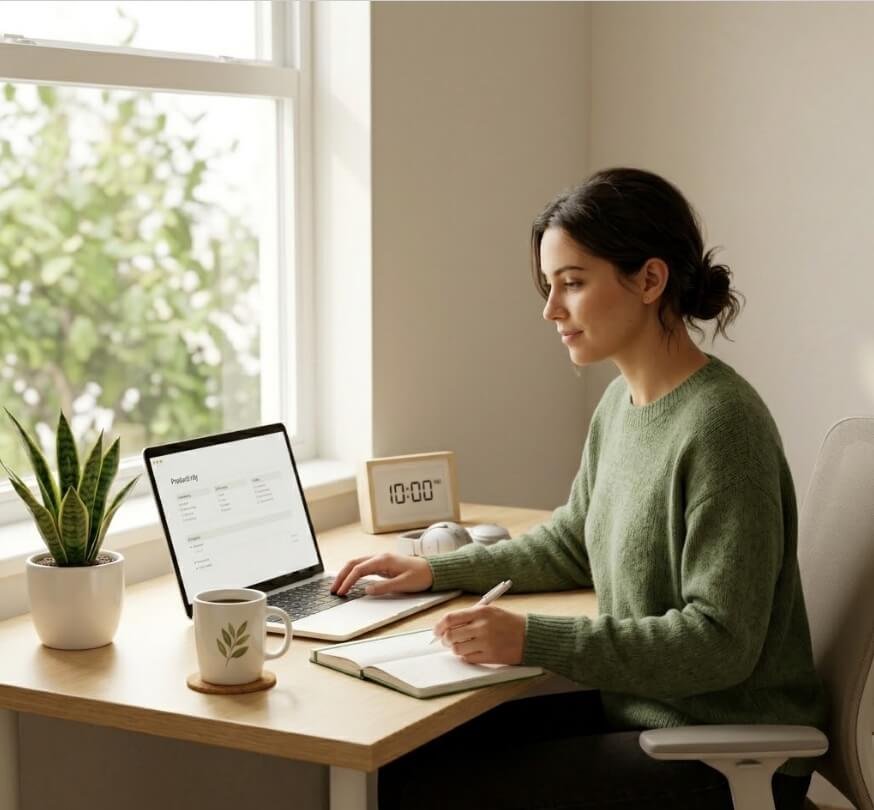
Introduce Strategic Greenery: Certain indoor plants act as natural air filters. Plants like the snake plant, peace lily, and English ivy are exceptional at absorbing common indoor toxins while releasing fresh oxygen. Placing two or three of these plants near your desk creates a localized micro-environment of cleaner air.
Maximize Air Exchange: If your office has windows that open, make it a habit to open them for at least ten minutes every morning. This simple action flushes out stagnant air and resets the indoor environment. If windows are sealed, talk to facility management about upgrading the building filters or consider using a small HEPA air purifier directly at your workstation.
Maintain the Infrastructure: Over months and years, dust and allergens collect deep inside building ventilation systems. Ensuring regular building maintenance, including professional air duct cleaning, keeps these particles from continuously recycling through your workspace.

Image source: Unsplash
2. Lighting the Way: Overcoming Visual Fatigue
The human brain evolved to operate under the shifting cycles of natural sunlight. Instead, the modern professional spends the day under the harsh, unyielding glare of overhead fluorescent lighting. This artificial light creates a state of perpetual biological confusion. It strains the eyes, triggers tension headaches, and disrupts our natural circadian rhythms.
Fluorescent bulbs often emit a subtle flicker that is invisible to the naked eye but highly disruptive to the nervous system. This constant visual static forces your brain to work harder just to process your surroundings.
When you combine this overhead glare with the high-energy blue light radiating from your computer monitor, you create the perfect recipe for intense visual fatigue by mid-afternoon.
Fixing your office lighting is one of the fastest ways to reclaim your mental energy and sharp focus.
Embrace Natural Light: Position your desk as close to a window as possible. Natural daylight stimulates the production of cortisol, which keeps you alert during the day, and regulates melatonin, which helps you sleep at night. Even if you cannot sit directly by a window, taking short walking breaks near natural light can reset your focus.
Layer Your Lighting: Turn off harsh overhead fluorescent lights whenever possible. Instead, rely on a mix of natural light and adjustable desk lamps. Use warm LED bulbs that mimic the soft glow of the sun rather than the stark white or blue tones of industrial lighting.
Adjust Your Screen Physics: Reduce the blue light output on all your digital devices. Most modern operating systems have built-in filters that warm up the screen display. Additionally, practice the 20-20-20 rule to prevent eye strain; every twenty minutes, look at an object twenty feet away for at least twenty seconds.
3. Designing for Focus: Ergonomics and Minimalist Spatial Layout
A cluttered, uncomfortable physical space creates a cluttered, anxious mind. Every object in your field of vision demands a tiny fraction of your brain’s processing power.
A desk piled high with old papers, loose tangled cords, and random sticky notes sends a continuous signal of disorganization to your subconscious, which increases your baseline stress levels.
Physical discomfort is another major distraction that erodes productivity. When your chair causes lower back pain or your monitor forces you to crane your neck, your brain constantly diverts energy away from your work to manage that physical stress.
You cannot maintain deep focus when your body is uncomfortable.
Detoxing your physical workspace involves streamlining your layout and prioritizing human ergonomics.
Implement a Daily Desk Clear: At the end of every workday, spend three minutes clearing your desk surface. File away loose papers, throw away trash, and hide necessary cords out of sight. Arriving at a clean, minimalist desk the next morning reduces cognitive friction and allows you to dive straight into important tasks.
Optimize Your Ergonomic Angles: Adjust your chair so your feet rest flat on the floor and your knees form a ninety-degree angle. Your computer monitor should sit directly at eye level, roughly an arm’s length away from your face. This setup prevents slouching, protects your neck, and keeps you physically comfortable through long stretches of deep work.
Create Movement Zones: Human bodies are built to move. Consider using a sit-stand desk converter that allows you to alternate between sitting and standing throughout the day. This simple shift boosts blood circulation, changes your physical perspective, and breaks up the monotony that causes mental fatigue.

4. The Acoustic Filter: Managing Sound and Mental Clarity
The modern open-office plan was designed to foster collaboration, but it often serves as a massive engine for distraction. The constant hum of side conversations, ringing phones, clicking keyboards, and heavy footsteps creates a chaotic acoustic environment.
Every sudden sound triggers a micro-startle response in the human brain. When a coworker laughs loudly nearby, your attention is automatically fractured. It can take up to twenty minutes to regain your original state of deep focus after a significant auditory interruption. Over the course of an eight-hour day, these constant interruptions dramatically reduce your total creative output.
Building a mindful acoustic environment requires setting clear boundaries for your hearing.
Use Sound Masking Tools: If you work in a noisy environment, invest in high-quality noise-canceling headphones. Instead of playing distracting music with lyrics, listen to pink noise, brown noise, or ambient nature sounds. These consistent audio frequencies mask background speech and create a predictable soundscape for your brain.
Establish Quiet Hours: Work with your team to establish shared expectations around silence. Creating dedicated “no-meeting blocks” or designated quiet zones in the office gives everyone permission to focus deeply without the fear of sudden interruptions.
Incorporate Soft Materials: If you have control over your private office space, add materials that absorb sound waves. Area rugs, fabric curtains, and acoustic wall panels reduce echoes and make the overall environment feel noticeably quieter and calmer.
Conclusion: Activating Your Mindful Workspace
Your physical workspace is the foundation of your daily productivity. When that environment is filled with stagnant air, harsh light, physical clutter, and chaotic noise, your brain must expend immense energy just to stay focused. By intentionally detoxing these elements, you remove the hidden friction holding you back.
Transforming your office into a mindful environment does not require a massive budget or a complete architectural remodel. True change happens through small, deliberate adjustments. Choosing to add a single green plant, clearing your desk every evening, or wearing noise- canceling headphones during deep work blocks can completely change how you feel at the end of the day.

Image source: Product Mockups by Moyo Studio (GET 15% OFF + 4 free mockups using our affiliate link). A look at our Goddess collection of astrology-inspired Squarespace website templates