How to Scale Your Brand With B2B Influencer Marketing
Would you trust a stranger's sales pitch more than a recommendation from someone you actually respect in your industry? Most business buyers wouldn't, and that's exactly why B2B influencer marketing has quietly become one of the smartest ways to grow a brand.
If you still picture influencer marketing as lifestyle bloggers and skincare hauls, it's time for an update. The B2B version looks completely different. Instead of relying on celebrity creators with millions of followers, successful B2B brands partner with industry experts who have earned trust among highly targeted audiences.
When done strategically, influencer marketing can increase brand awareness, generate qualified leads, and strengthen your position in the market.

Image source: Pexels
What B2B Influencer Marketing Actually Means
B2B influencer marketing focuses on collaborating with professionals who influence business decisions within a specific industry. These influencers may be analysts, consultants, founders, educators, researchers, or experienced practitioners whose opinions are respected by your ideal customers. Instead of promoting products to a broad audience, they help brands reach decision-makers through trusted recommendations and valuable insights.
Unlike B2C campaigns, success isn't measured by audience size alone. B2B buyers are looking for expertise, credibility, and useful information before making purchasing decisions. Since business purchases often involve longer sales cycles and careful research, educational, trust-based partnerships are far more effective than promotional advertising.
1. Target Niche Experts and Community Gatekeepers
The most successful B2B influencer campaigns focus on quality rather than quantity. Instead of choosing influencers with the largest audiences, look for individuals who already have the attention and trust of your ideal customer profile.
Prioritize partnerships with:
Subject matter experts such as analysts, consultants, authors, and educators who regularly share industry insights.
Community gatekeepers who manage or actively participate in niche Slack groups, Discord communities, LinkedIn groups, and professional forums where buying conversations naturally take place.
Customer advocates who already use your products or services and can share authentic experiences with their own audiences.
Finding the right partners can be time-consuming, which is why many businesses work with agencies that specialize in B2B creator partnerships. Cherry Lane Media is one example of a team that helps brands connect with credible industry voices and build campaigns designed to influence real purchasing decisions rather than simply increasing social engagement.





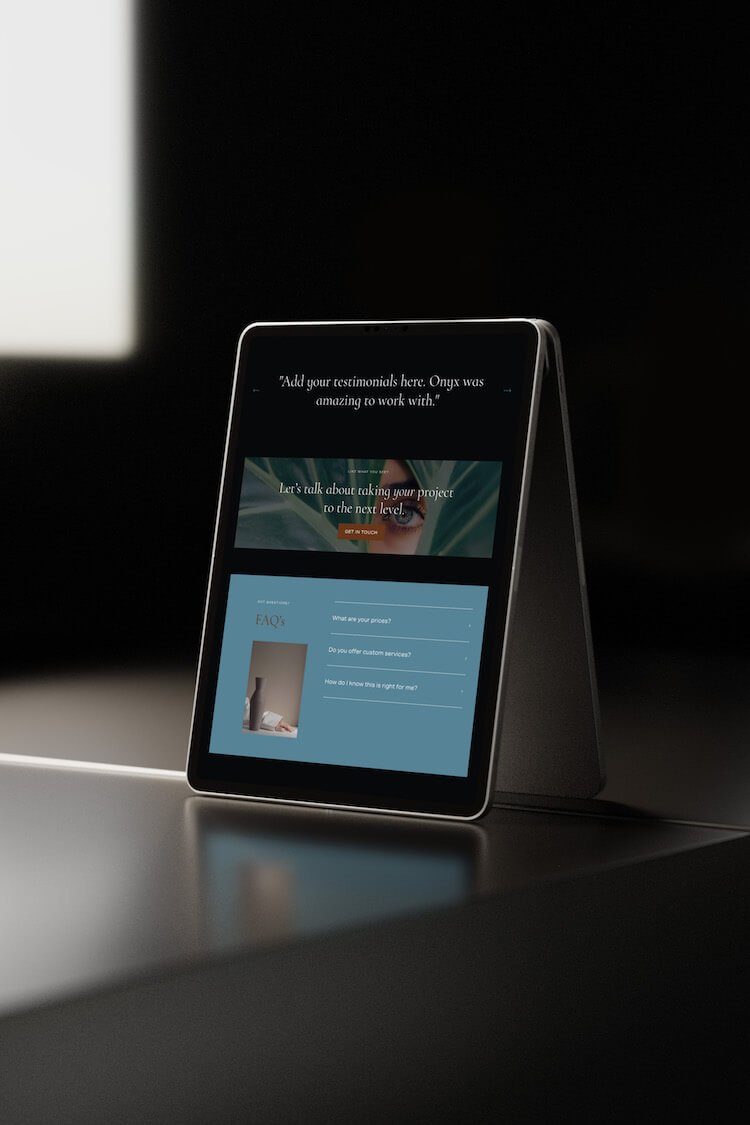

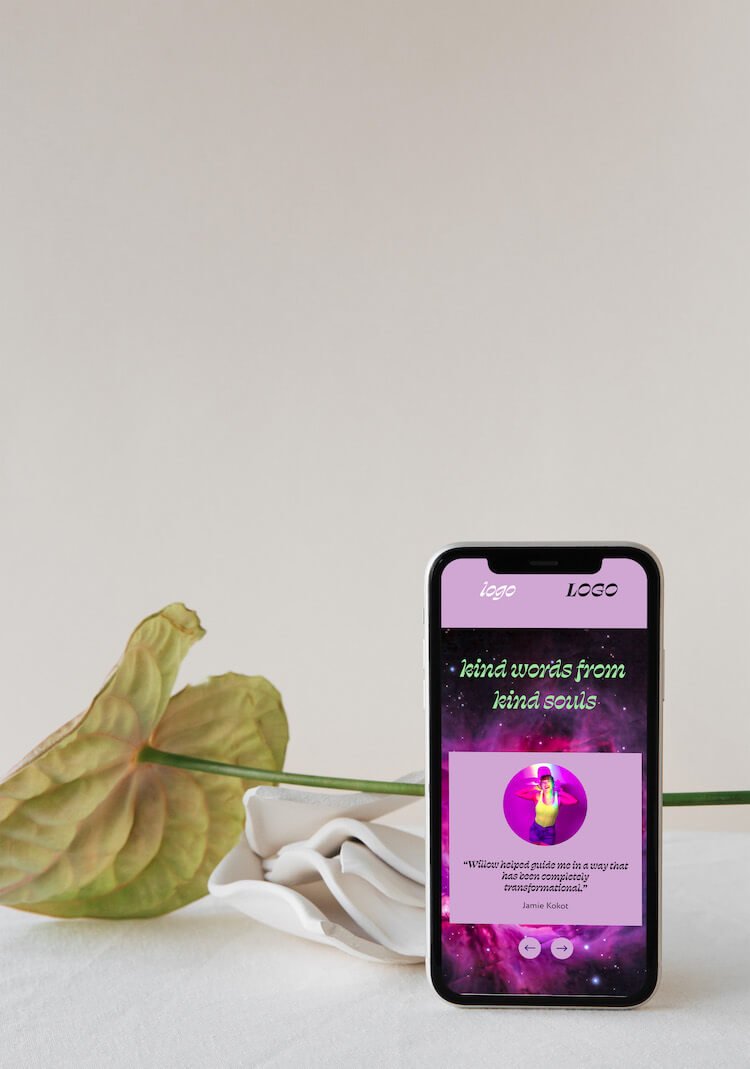
Speaking of niche experts, pictured above are some examples from our expertly designed Squarespace website template collection to show you how you can position your expertise like social proof in testimonial sections or in-depth case studies in your portfolio page. Every template has a pre-designed pages which makes it simple and quick to add value-packed, relevant case studies to provide proof of how your business has impacted customers over time. This is the fastest way to build trust, especially in the online space. Keep in mind that that is essential to keep this page updated as your business grows, and feedback changes over time.
Image source: Premium product mockups by Moyo Studio (GET 15% OFF + 4 free mockups using our affiliate link).
2. Focus on Co-Created, Educational Content
Business buyers consume a significant amount of information before choosing a solution, so influencer collaborations should educate first and promote second.
Instead of asking creators to publish straightforward advertisements, work together to produce content that genuinely helps your audience.
Effective content formats include:
Co-hosted webinars featuring recognized industry experts.
Live panel discussions and virtual Q&A sessions.
Podcasts and expert interviews.
Long-form product reviews, demonstrations, or walkthrough videos.
Research roundups and thought leadership articles.
Exclusive educational sessions within private communities.
Allow creators enough creative freedom to communicate in their own style. Authentic messaging feels more trustworthy, while heavily scripted promotional content often performs poorly with professional audiences.

Image source: Pexels
3. Track Funnel-Wide KPIs
Likes and follower counts provide only a small part of the picture. While they can indicate that your content is reaching people, they don't necessarily show whether it's helping your business grow.
To understand the real impact of your influencer marketing efforts, measure performance across the entire customer journey. Tracking metrics at every stage of the sales funnel allows you to see how campaigns contribute to brand awareness, audience engagement, lead generation, and ultimately, conversions.
Top of the funnel
Impressions
Reach
Video watch time
Saves and shares
Brand awareness
Middle of the funnel
Website visits
Landing page views
Click-through rate (CTR)
Content downloads
Email subscriptions
Bottom of the funnel
Demo requests
Free trial registrations
Marketing Qualified Leads (MQLs)
Sales Qualified Leads (SQLs)
Opportunities tracked through affiliate links, custom promo codes, and campaign-specific URLs
Evaluating each stage of the funnel gives a much clearer understanding of return on investment than engagement metrics alone.
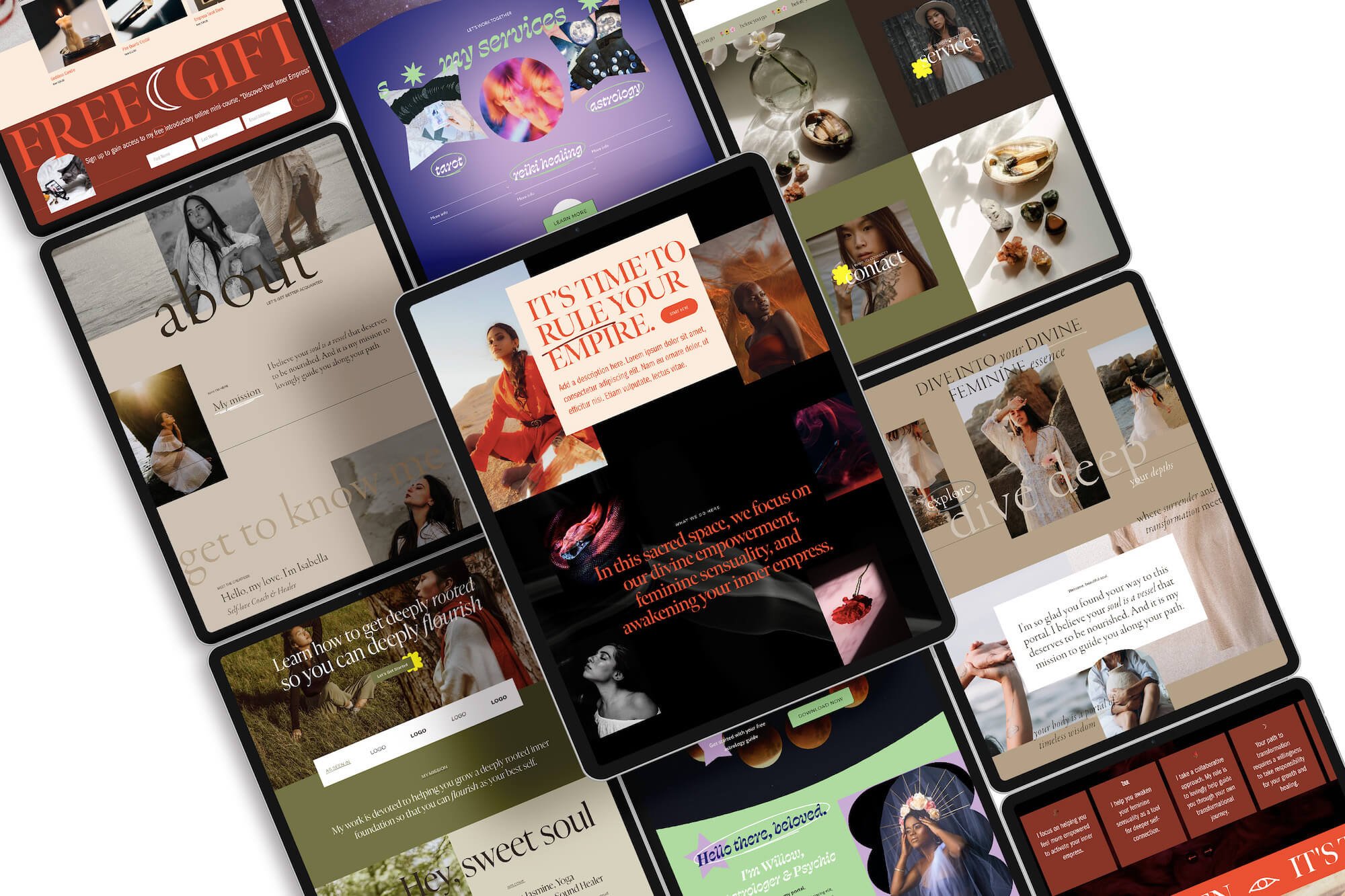
Image source: The Humanista Co.’s expertly-designed, astrology-inspired Squarespace website template collection
4. Empower Creators and Cross-Amplify
Strong influencer partnerships don't end when content is published. The best campaigns continue delivering value by extending the reach of successful content across multiple marketing channels.
To maximize results:
Give creators the flexibility to present your brand naturally in their own voice.
Share influencer content across your company's website, blog, email newsletters, and social media channels.
Encourage creators to promote collaboration across their own professional networks.
Repurpose webinars, podcasts, and long-form videos into shorter clips, articles, and downloadable resources.
Turn the highest-performing organic content into paid campaigns, such as LinkedIn Sponsored Content, to reach additional decision-makers.
Treat influencer relationships as long-term collaborations rather than one-time sponsorships. Consistent partnerships build stronger credibility, reinforce your messaging, and often produce better business results over time.
Conclusion
B2B influencer marketing isn't about partnering with the biggest creators on social media. It's about collaborating with trusted experts who already have the attention of your target audience.
By focusing on niche industry leaders, creating educational content, measuring results across the entire sales funnel, and amplifying high-performing campaigns, businesses can build an influencer strategy that drives awareness, generates qualified leads, and supports long-term growth.