The Human Connection and Why We Seek Stories in Faraway Places
There is something quietly remarkable about the way a human being will pack a bag, leave behind the familiar rhythm of daily life, and travel thousands of miles to stand in front of a waterfall, a ruin, or a stretch of coastline they have only ever seen in photographs.
On the surface, this behavior might look like leisure, or escapism, or simply a desire to take a good photograph. But look a little closer, and you will find something far more layered beneath the surface.
Travel, at its core, is a search for story. Not the kind found in novels, but the living, breathing kind that happens when a person is placed in an unfamiliar landscape and forced to pay attention. The stories we seek in faraway places are not just about the destination; they are about who we become when we arrive, how we connect with people who speak different languages, eat different food, and carry entirely different histories in their blood.
This article explores the deep human instinct to seek connection through travel, and why the stories we find far from home often turn out to be the ones we needed most.

Image source: Unsplash
The Ancient Impulse to Wander
Long before social media feeds were filled with golden-hour shots of Santorini and Patagonian peaks, human beings were wandering. The earliest members of our species crossed continents not for holidays, but for survival. Yet even as civilization settled, built walls, and organized itself into cities and states, the impulse to move outward never fully quieted. Pilgrims walked hundreds of miles to sacred sites. Merchants traveled across deserts to trade not just goods, but ideas. Explorers sailed into uncharted waters driven by a restlessness that no comfortable life could fully satisfy.
What drove these early wanderers? Anthropologists and psychologists have long debated this, but one recurring answer is simple: curiosity. Human beings are uniquely wired to seek novelty. Our brains respond to new environments with heightened attention, releasing dopamine as we process unfamiliar sights, sounds, and social interactions. This neurological response is not accidental; it is the biological signature of a species built to learn from its surroundings.
But curiosity alone does not explain the emotional weight that travel carries for so many people. The person who cries at a particular cathedral, or feels inexplicably moved standing at the edge of a canyon at dawn, is not merely processing novelty. They are experiencing something that touches the deeper architecture of human meaning-making.
Travel, it turns out, does not just stimulate the brain; it speaks to the part of us that is always quietly asking who we are and where we belong in the larger story of the world.

Image source: Unsplash
Stories as the Currency of Human Connection
Every culture on earth shares stories. Before writing existed, people gathered around fires and passed down knowledge, identity, and belonging through narrative. The story was the technology that held communities together, that explained the unexplainable, that reminded people of their place in a world far larger than any single human life.
When we travel, we step voluntarily into stories that are not our own. We visit places that carry centuries of human experience inside them, where every stone wall or market square or mountain trail holds the imprint of people who lived and loved and suffered there long before we arrived. This is why even a brief conversation with a local fisherman on a Portuguese coast, or a shared meal with a family in rural Vietnam, can feel so disproportionately profound. In those moments, the invisible wall between self and other becomes thin. We are reminded, viscerally, that the world is full of lives as rich and complex as our own.
Researchers in social psychology have found that narrative engagement, the act of following and absorbing a story, is one of the most powerful mechanisms for building empathy. When we inhabit someone else's story, even briefly, we become more capable of understanding their perspective, their fears, their joys.
Travel does this at scale. It is empathy applied to geography. It is the practice of allowing the world to be more complicated and more beautiful than the version we carry in our heads at home.
This is why returning travelers so often describe a shift in how they see their own lives. Not because they have escaped their problems, but because they have placed those problems inside a much larger frame, one populated by different kinds of struggles, different definitions of happiness, and different but equally valid ways of being human.
The Landscape That Listens
There is another dimension to travel that deserves careful attention, and it is the one that has nothing to do with other people at all. Some of the most transformative travel experiences happen in places of extraordinary natural beauty, in landscapes so vast or so ancient that the human ego seems to quietly step aside.
Consider the effect of standing at the foot of a glacier, or watching the sun dissolve into the Pacific Ocean, or walking through a forest so old that the trees feel more like presences than plants. These moments do something to the nervous system that is difficult to articulate but easy to recognize. The breath slows. The internal monologue pauses. A kind of spaciousness opens up where, minutes before, there was only the noise of daily preoccupation.
This is part of what draws so many travelers to the southern hemisphere, to places like the fjords of Patagonia, the red deserts of outback Australia, and the dramatic coastlines of New Zealand, where the landscape itself seems to hold a kind of moral authority. New Zealand holidays are beloved not only for the beauty of the scenery but for the way that beauty reorients the traveler. The land asks something of you, quietly and insistently.
Psychologists have a term for this kind of experience: awe. Research on awe consistently shows that encounters with vast, seemingly infinite natural phenomena cause people to feel smaller in relation to the world, and paradoxically, more connected to it. Awe reduces self-focused thinking, increases prosocial behavior, and generates a sense of being part of something larger than oneself.
In other words, the places that take your breath away are not just aesthetically impressive; they are emotionally and psychologically regenerative. They remind you, at the cellular level, that you are a small and temporary part of something enormous and ongoing.
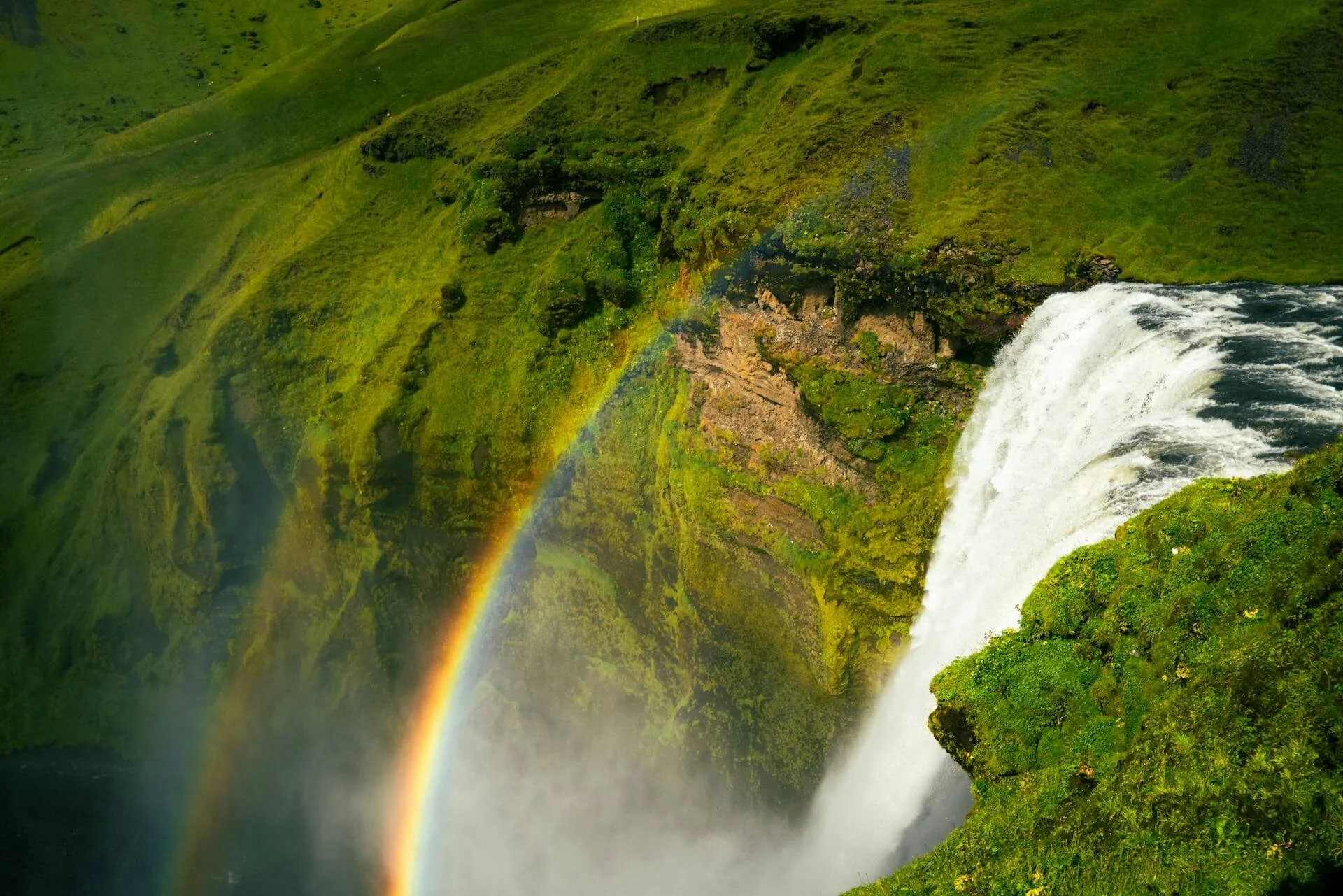
Image source: Unsplash

Image source: Unsplash
Coming Home Changed
The philosopher Alain de Botton once observed that the anticipation of travel can sometimes exceed the experience itself, and that we often carry our anxieties with us wherever we go. There is truth in this. A person who travels to escape their problems will usually find that the problems have made the same booking and are waiting in the hotel room when they arrive.
But this does not diminish the genuine transformative potential of travel. It simply clarifies what that transformation requires. Meaningful travel is not passive. It asks something of the traveler: a willingness to be uncomfortable, to not understand, to sit with uncertainty, to look and listen before forming conclusions.
The traveler who moves through the world with this kind of openness, who allows themselves to be surprised and unsettled and occasionally completely lost, is the one who tends to come home changed.
Changed, in this context, does not mean fixed. It means widened. The person who returns from a long journey is not a different person; they are a fuller one. They have added new reference points to their inner map of the world. They have met people and landscapes and moments that exist now as living memories, as counterweights to the smallness of routine.
And they carry those stories forward, sharing them at dinner tables and in coffee shops, passing them quietly from person to person in the way that human beings have always passed stories, because that is how we stay connected to one another across all the distances that divide us.
Conclusion and Call to Action
The search for story in faraway places is not a luxury or an indulgence. It is one of the oldest and most essential expressions of human curiosity, empathy, and the need to belong to something larger than a single life in a single place. Travel, when approached with genuine openness, has the power to build bridges between cultures, to deepen self-understanding, and to remind us that the world is far more generous with its beauty and complexity than any daily routine could ever reveal.
If you have been thinking about taking that trip, whether it is a weekend drive to an unfamiliar town or a flight to the other side of the world, let this be the nudge you needed. Start planning. Research destinations that have always quietly called to you. Read about the history and culture of the places you want to visit. Talk to people who have been there.
And when you arrive, put the phone down occasionally, look around, and let the story of the place come to meet you.

Image source: Product Mockups by Moyo Studio (GET 15% OFF + 4 free mockups using our affiliate link). A look at our Goddess collection of astrology-inspired Squarespace website templates