How Creative Entrepreneurs Can Manage Business Without Losing Inspiration
Creative entrepreneurs and coaches building a personal brand often hit the same wall: the work feels alive, but the business side feels heavy. Between business challenges for creatives like inconsistent messaging, branding confusion, and visual identity gaps, it’s easy for small creative business pain points to steal time and focus from the craft.
The core tension is real, maintaining artistic inspiration while managing clients, money, and marketing can start to feel like choosing one or the other. With the right creative business management, the business can support the art instead of squeezing it.

Image source: pexels.com
Quick Summary: Keep Business Simple, Keep Ideas Flowing
Set clear pricing that values your work and makes projects sustainable.
Use simple contracts and invoices to protect scope, timelines, and payments.
Build a basic workflow so projects move forward without constant mental juggling.
Track finances in a straightforward way to stay confident about cash flow.
Market authentically while protecting creative time with boundaries and dedicated focus blocks.
Set Up Simple Business Systems That Protect Your Art
This process helps you build a business “backbone” that supports your creativity: clear pricing, solid agreements, simple invoicing, and organized finances. For bold, growth-minded creative entrepreneurs, these systems reduce mental clutter so your brand voice stays strong and your energy stays focused on the work.
1. Set your pricing baseline and boundaries.
Start with a simple baseline: your minimum project fee, your standard deliverables, and the hours you can realistically create without burning out. Add 2 to 3 non-negotiables like revision limits, turnaround time, and what counts as “scope creep” so your pricing protects both your time and your creative quality.
2. Lock in must-have contract essentials.
Choose a short contract template you can reuse, then customize it with your scope, timeline, payment schedule, and usage rights so expectations are clear before inspiration turns into unpaid labor. Confirm what happens if the client pauses, cancels, or requests extra work, then keep the signed copy in one easy-to-find folder.
3. Build invoice basics you can repeat.
Create one invoice template you can duplicate for every job so you never start from scratch and you look consistent across clients. A guide for creatives recommends you create a clear and editable template so sending invoices becomes a quick admin habit instead of a stress spike.
4. Design a simple workflow from inquiry to delivery.
Write your workflow as 6 to 8 steps in plain language: inquiry, discovery call, proposal, contract, deposit, creation, review, final files, final invoice. Use the same checklist every time so your process feels professional, your client experience matches your brand, and your brain stays free for creative decisions.
5. Track income, expenses, and taxes with one weekly ritual.
Pick one tracking method you will actually use, then schedule a 20-minute weekly money check-in to log income, categorize expenses, and save receipts. An expense workflow starts with gathering the relevant records, which makes tax time far less chaotic and gives you clearer signals about what to price, cut, or keep.
Build this once, then let it hold you steady, and understanding a business administration bachelor’s degree can help you think through the same systems with more clarity.

Image source: pexels.com
Market Yourself Authentically with a 4-Part Visibility Routine
Authentic marketing for creatives works best when it’s routine-based, not mood-based. Use this simple 4-part visibility rhythm to stay present online without feeling pushy, or burning out.
1. Build a “3-3-3” starter portfolio.
Choose 3 best projects, write 3 short case studies, and list 3 clear services. Each case study can be just: the client goal, your process (3 steps), and the outcome, plus 1–2 visuals. This makes it easy for someone to understand what you do and easy for you to reuse the wording everywhere (site, proposals, captions).
2. Lock in your brand basics (and repeat them on purpose).
Pick a small brand kit you can maintain: 2 fonts, 3 colors, 1 photo style, and 3 “brand keywords” (like bold, grounded, playful). Then apply it consistently across your homepage, social header, and one reusable post template. A survey shared by Marq suggests a 10-20% increase in overall growth when a brand is consistently maintained, your version of that is simply looking recognizable and reliable.
3. Collect social proof like it’s part of your workflow.
Add a “proof step” to your project wrap-up checklist right next to invoice and delivery. Send a 3-question prompt: “What were you struggling with before? What changed? What would you tell someone like you?” This keeps testimonials specific (and usable), and it pairs nicely with the systems you already set up, contracts define what “done” means, and a wrap-up email makes asking feel normal.





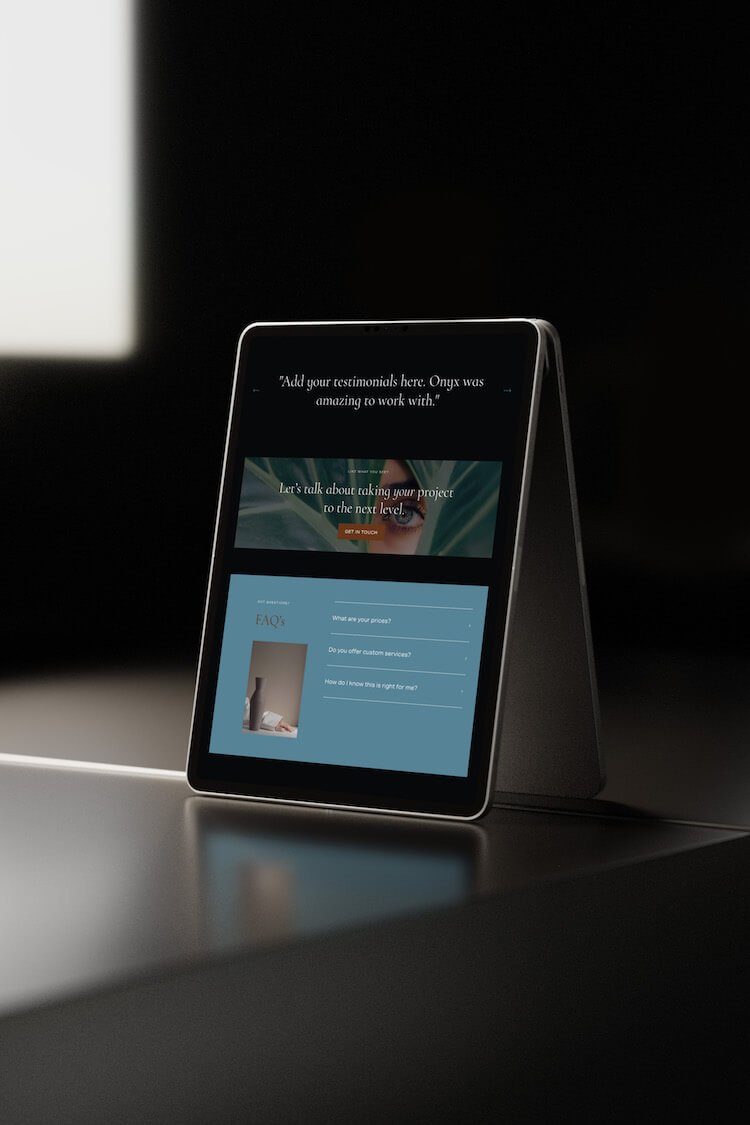

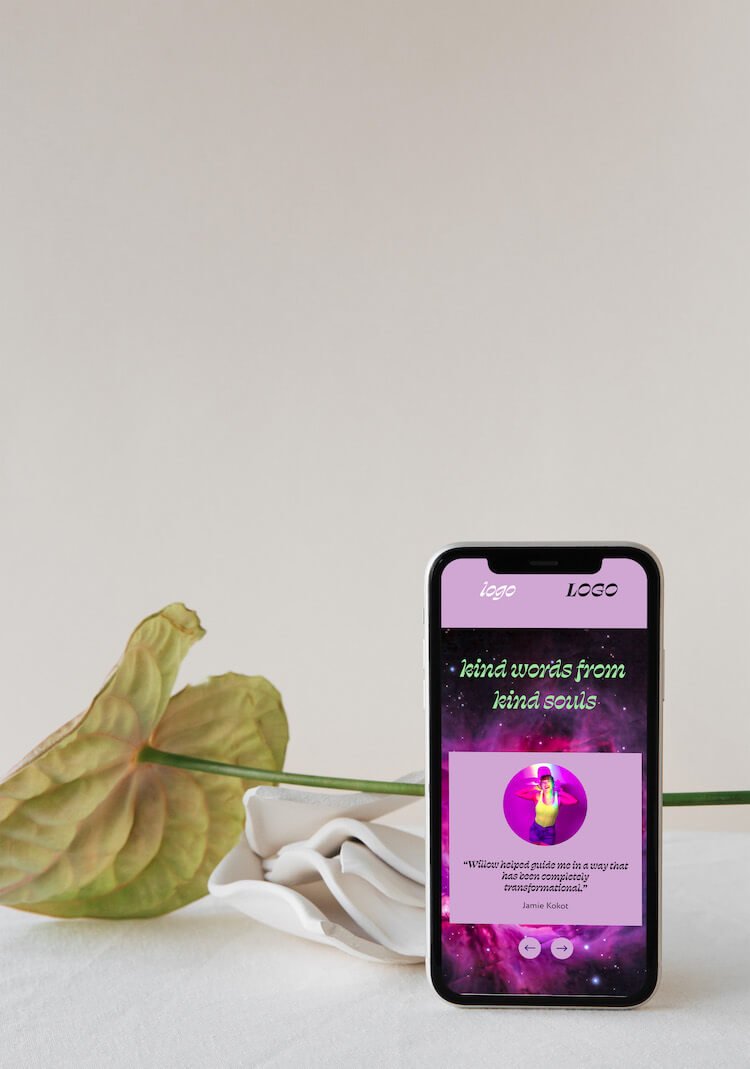
Pictured above are some examples from our astrology-inspired Squarespace website template collection to show you how you can display your social proof in testimonial sections on your website portfolio as you continue to collect customer feedback over time. Every template has a pre-designed Case Studies page which makes it simple and quick to add value-packed, relevant case studies to provide proof of how your business has impacted customers over time. This is the fastest way to build trust, especially in the online space. Keep in mind that that is essential to keep this page updated as your business grows, and feedback changes over time.
Image source: Premium product mockups by Moyo Studio (GET 15% OFF + 4 free mockups using our affiliate link).
4.Turn testimonials into ‘micro-proof’ content.
Don’t save reviews for a single testimonials page. Post one short quote as a graphic, one as a caption, and one inside a portfolio case study so proof shows up where people make decisions. The social proof method tends to land best when it’s tailored, so label it to the right person: “For first-time course creators…” or “If your brand feels all over the place…”
5. Use non-salesy outreach that matches your personality.
Choose one outreach lane for 15 minutes, 3 days a week: thoughtful comments, warm DMs, or email introductions. Keep it simple: a genuine compliment, one specific observation, and a low-pressure question (no link, no pitch). Example: “Your about page feels so warm, are you planning to add a booking page this season?”
6. Protect your creative energy with visibility boundaries.
Decide your minimum rhythm (like 1 post + 3 comments weekly) and put it on your calendar the same way you schedule client work. Tie it to your money and time systems: when your pricing baseline and workflow are clear, you can market what you actually have capacity to deliver. These habits make it easier to talk about deposits, scope, and boundaries with calm, confident language.
Aligned creative branding can deepen trust without feeling salesy
Branding that feels aligned can make trust easier
If you’re trying to build trust without sounding salesy, your brand has to feel like you—steady, clear, and consistent. That’s where aligned creative branding services can help: they take what you believe, how you serve, and what you want to be known for, and shape it into messaging and visuals that actually match. When your brand looks and sounds grounded, hesitant customers don’t have to guess if you’re the real deal—they can sense it.
A few practical benefits:
Clearer voice and values so the right people recognize you fast
More consistency across your site, socials, and offers (less “mixed signals”)
Stronger emotional connection without hype or pressure
Better differentiation because you stop blending in with templates
If that’s the kind of support you’re looking for, check out our astrology-inspired Squarespace website templates to revamp your brand from the inside out.
Creative Business Boundaries: Common Questions
How do I protect creative work time when client messages never stop?
Set two daily “office hours” for replies and keep the rest message-free. Add your response window to your welcome email and contract so it feels normal, not personal. Draft email templates for common requests so you can copy, tweak, and send without losing your flow.
What should I say when a client asks for “just one more thing”?
Name it as a change request and ask what they want to trade for it: timeline, budget, or another deliverable. Then offer two options: a paid add-on or a Phase Two. Calm structure protects the relationship and your creative momentum.
Can I require a deposit without sounding intense?
Yes. Frame it as scheduling protection: “Your deposit reserves production time and starts the project.” Put the amount, due date, and payment method in writing and do not begin work until it clears.
How do I keep scope from exploding once the project starts?
Use a single source of truth: one proposal, one timeline, one feedback channel. Document the steps and roles so there’s no confusion about who does what, and decisions stop bouncing around.
How often should I review my business routines so things don’t slide?
Do a 20-minute monthly check and a deeper quarterly reset. A monthly scan catches small leaks before they become chaos, especially when business routines impacted require you to pivot.
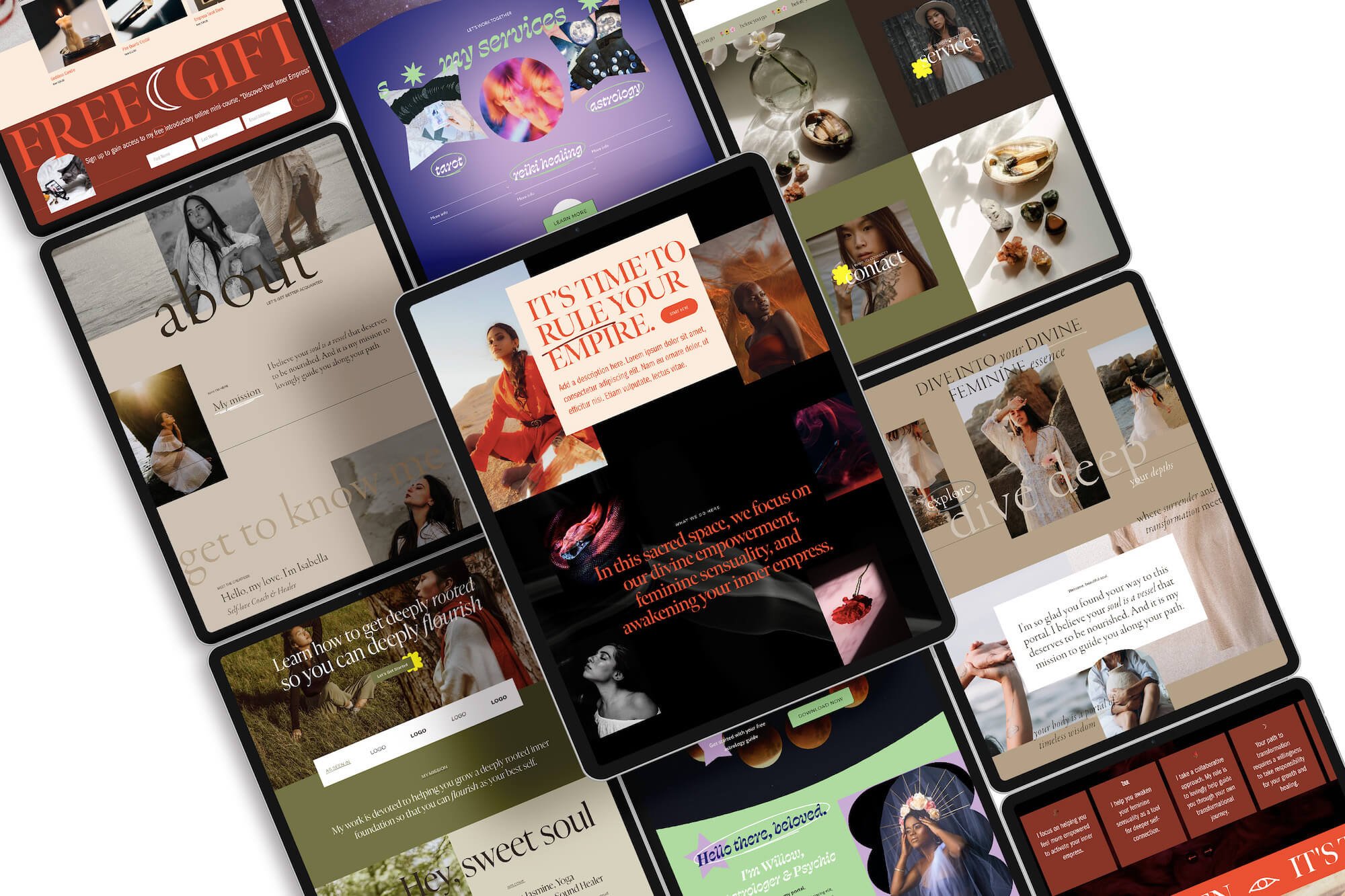
A look at The Humanista Co.’s Goddess collection of astrology-inspired Squarespace website templates. Image source: Premium product mockups by Moyo Studio to showcase your products in an elevated way (GET 15% OFF + 4 free mockups using our affiliate link).
Simple Systems That Protect Your Creativity as Business Grows
Creative work can’t stay inspired when the business side is always on fire. The steadier approach is to build light structure first, foundational business tools, clear boundaries, and a rhythm of reflection, then keep scaling creative business systems only as needed.
When that becomes the default, decisions get easier, client work feels cleaner, and sustainable business growth starts supporting creative career development instead of draining it. Structure should serve the art, not suffocate it. Pick 3 tools, schedule a monthly business review, and keep the next improvement small. That steady cadence builds resilience and momentum without sacrificing the creative spark that started it all.